4

Bodybuilding for Beginners

beginning bodybuilding

Everybody starts at the beginning

Bodybuilding for beginners is where you start your muscle-building future. You'll want to start out with the right exercises, the right diet, and the right recovery programs.

Muscles grow as a result of overloading them, feeding them, and letting them recuperate, so that they grow stronger and bigger over time. You need all three components (exercise, nutrition, and rest) to make any gains. Two out of three is not good enough.

It is at this stage where you learn the basics of bodybuilding.

Bodybuilding Basics

First things first! You want to hit the weights, and I don't blame you. Just don't forget about the other two pillars (and don't forget about mindset – which won't be a problem when you're starting out but it will when you hit your first sticking point).

Exercises

In your first month, these are the exercises you want to do (just watch, don't necessarily listen to the recommendations):

Lift on Mondays, Wednesdays, and Fridays, or every other day. This gives your muscles time to recover, adapt, and grow.

On your rest days, do your normal thing. If you like to run, run. If you ride a bike, ride a bike. On your workout days, try to just lift weights.

Of course, this may be a bit impractical. If you're on a high school football team, you will practice every day. There's no getting around that.

However, this makes it all the more important to really do nothing on your off days (like Saturday and Sunday).

Your body and mind need the rest. There is a strong central nervous system (CNS) response to weight training.

After one month, add one set to each exercise and stick with that for 3 months. Add weight when you can, in the smallest increments possible.

In many cases, beginning bodybuilders find that they can add weight every single workout to almost every exercise. If you can – great. If you can't, that's great, too.

Everybody gains strength at different rates. Consistency at this point is king.

Diet

My experience tells me that eating a “normal” diet is best, supplemented as needed with in-between meal snacks. Stick to wholesome, whole foods. Organic when possible.

Eat a variety of foods, like beef, chicken, eggs, milk, and fish for your protein sources. Grains, vegetables, and fruits for your carbs. You needn't worry much about fats, as if you cover the protein category, you most likely won't be lacking in fat intake.

Do not, however, try to go on a low- or no-fat diet, even if you're overweight. That's a really bad idea. Once you begin limiting your fat intake, your body goes into survival mode and begins hoarding the fat you do eat. Worse yet, it begins conserving your body fat.

The results are often counter to your objective – you gain fat.

To summarize: Eat 3 meals a day with 2 or 3 snacks in between. If you feel hungry, eat more often. If you can't eat that often, do the best you can. If time isn't on your side, mix up a meal replacement shake (MetRx is great) in the morning and carry it without you throughout the day.

At this point, supplements aren't really necessary, outside of a good protein supplement (like the aforementioned MetRx – pick it up at Trader Joe's) and multi-vitamin/mineral tablet.

Rest & Recovery

This is one of those very “iffy” areas. Everybody – and every body – has different needs when it comes to rest and recovery.

So these are general guidelines:

  • Get 7-9 hours of sleep
  • Rest as much as you can when you're not working out, unless you're overweight
    • In that case, do some steady-state cardio on off days
  • Don't do any “extra” weight training – stick to the guidelines above
  • If you feel like you're tired all the time, get more rest – you will find a way (take a nap)
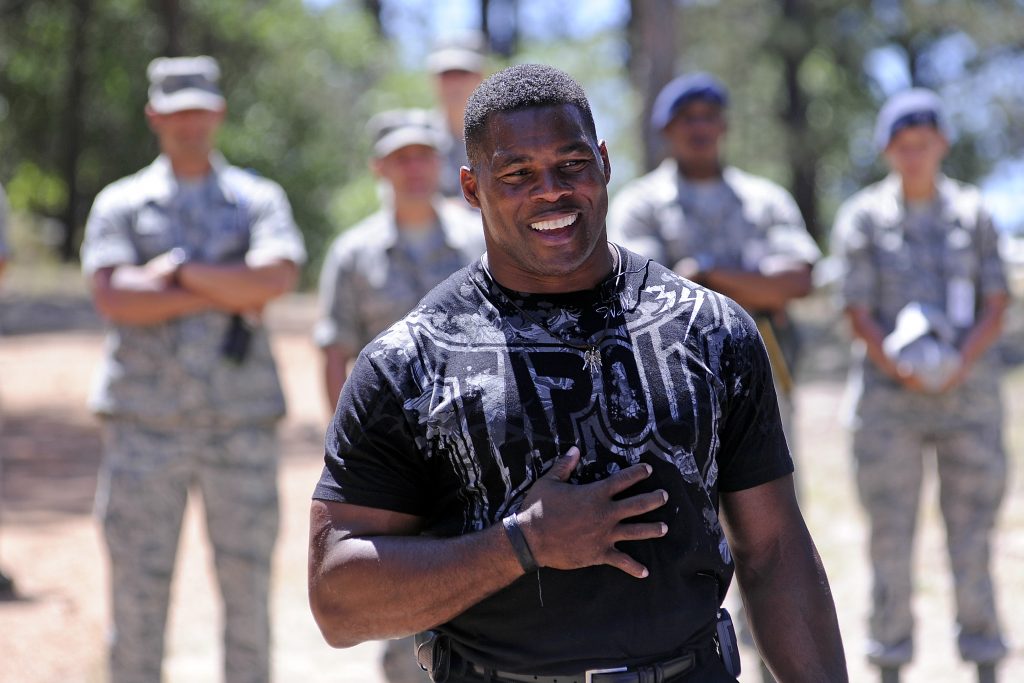
 

Body Weight Exercises Can Be Super Effective

Football great Herschel Walker speaks to the Class of 2016 during Basic Cadet Training in the U.S. Air Force Academy's Jacks Valley in Colorado Springs, Colo. July 17, 2012. Walker spent time talking to the Class of 2016 about resiliency, his own personal struggles in life and encouraged the cadets to reach out and seek help if they need it.

Football great Herschel Walker speaks to the Class of 2016 during Basic Cadet Training in the U.S. Air Force Academy's Jacks Valley in Colorado Springs, Colo. July 17, 2012. Walker spent time talking to the Class of 2016 about resiliency, his own personal struggles in life and encouraged the cadets to reach out and seek help if they need it.

I LOVE body weight exercises! I like “weighted” body weight exercises, even better!

More precisely, I love exercises that don't require much — if any — in the way of equipment. You can do body weight exercises anywhere: At home, in an apartment, at the beach, in a hotel room.

Some of the best athletes in the world use body weight exercises in their exercise regimens. Herschel Walker, for example, is known for doing hundreds of sit-ups and push-ups a day (up to 2000) and look at him!

Push-ups are one of the best upper body builders known to man. As you gain strength and endurance in the shoulders, chest, and arms (they're great for the core, too, by the way), you can either elevate your feet on steps or a chair, use simple push-up bars, or add a weighted vest so that you can push more weight.

And I don't care who you are or what you say, sit-ups and crunches build core strength like nobody's business. They are not bad for your back (if you're healthy), either.

Pull-ups, or chin-ups, build upper body strength and bulk, too, especially in the lats, shoulders, and arms. You can do these at any park you can find. You can also buy doorway pull-up bars for very little money. Again, as you gain strength and endurance, you can add a weighted vest to give you more resistance.

Body weight squats are a little more difficult to do. Oh, you can squat with just your body weight but you need to do a LOT of reps to get any kind of burn. And you'll improve your endurance but your strength will not increase by much after the first couple weeks of body weight squatting.

However, after you gain enough strength to do 50 body weight squats, try doing some “pistol squats”. These are one-legged squats, where, at first, you do them while supporting yourself by holding onto a bar and then eventually, as your coordination gets better, you can do them without holding onto anything.

The venerable “sissy squat” is also a great body weight exercise that really works the quads. You do these by rising up on your toes and forming a straight line that does not bend, all the way from the knees to the head. As you “squat” down, your body is forming a “V” that is getting more and more “shrunk”. Here's a video showing exactly how to do a sissy squat:


Image credit: Licensed for re-use – https://upload.wikimedia.org/wikipedia/commons/a/a7/Flickr_-_DVIDSHUB_-_Herschel_Walker_visit_with_USAFA_Class_of_2016_Basic_Cadet_Training_(Image_4_of_17).jpg

Bill Pearl

Bill PearlBill Pearl ushered in the modern era of bodybuilding, in my humble yet accurate opinion. He was the first really massive bodybuilder to experience a whole lot of success in the '50s and '60s.
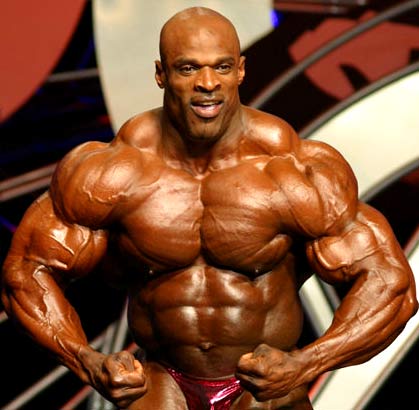
Pearl won the pro Mr. Universe 4 times and would likely have won the Mr. Olympia; however, that contest didn't exist during his heyday so he never entered it. In fact, by the time the first Mr. O was held, in 1965, Pearl had already amassed 3 of his Mr. Universe titles.

Not many remember but Pearl was in his forties when he won his fourth and final pro Mr. U in 1971.

Even fewer remember that he won his first major contest in 1953, beating out Sean Connery in the amateur Mr. Universe.

Many know him to be a vegetarian bodybuilder. But he only converted from being an omnivore to a vegetarian after he'd built all his mass and experienced much of his success. In fact, he was 39 when he became a lacto-ovo vegetarian (meaning he includes dairy and eggs in his daily diet).

Bill Pearl has authored several bodybuilding books. Two of his most popular are Keys to the INNER Universe and Getting Stronger.

2

Buidling Big Thighs Like Tom Platz

Want Big Thighs? Here's Your Guide

To build big thighs, you've got to squat. BIG. You don't need a lot of sets, but you do need a lot of reps. With as heavy weight as possible. You should really be heaving when you're done with each set.

Tom Platz legs

Best legs ever?

Building massive thighs also means training with variety, especially in terms of sets and reps. Your exercises will stay the same, for the most part.

Here's a typical weight training program:

  • Pre-exhaust the quadriceps with Leg Extensions. Follow up immediately with heavy squats. Do 4 sets of 15 reps of both extensions and squats.
  • Follow up with Leg Presses. These build big quads and hamstrings. You can really isolate the quads with this one. Do 3 sets of 10, using a LOT of weight
  • Leg curls. Do 4 sets of 20 reps.

You can vary your training by doing a week of just squats. Try for 7 sets of 20 reps. Couple this with stiff-legged deadlifts to work the hamstrings. This is a very simple program for building tremendous upper leg mass.


Image source: http://www.gym-talk.com/tom-platz-leg-workout/

1

Big Shoulders Made Simple

Ronnie Coleman has gigantic deltoidsBuilding big shoulders is easy if you know how to do it. The deltoids consist of three parts: The anterior (or front), the lateral (or side), and the posterior (or back). In order to fully develop the shoulders, you need to build all three of these heads.

Your front delts are stressed through bench presses and shoulder presses. You normally don't have to perform an isolation movement for the fronts. And the rears are stimulated to a lesser degree by bent-over rows and lat pull-downs. However, your side delts really are not worked out at all by the complex movements advocated here at Muscle-Build.com. Therefore, if you want to build big shoulders, you'll need to supplement your weight training with some isolation moves.

Here's a great delt work-out if you want wider, more developed shoulders:

  • Side laterals. Using dumbbells at your side, raise them in an arc such that when you're finished you will have formed a “T” with your arms. As a variant, you can do these slightly bent at the waist to involve the lateral and posterior deltoids. Do 3 sets of 10-15 reps.
  • Rotating dumbbell presses. Starting at the chin, with hands in the finish position of a dumbbell curl, press the dumbbells up while rotating the arms to finish in a dumbbell press position. In effect, you're working the front delt, but also involving the lateral delt with the rotation. Do 3 sets of 10-15 reps.
  • Bent-over laterals. Similar to the side laterals above, you do the same motion, only with your torso parallel to the floor. Do 2 sets of 10-15 reps.
  • Upright rows. Using a barbell, with a 6-12 inch overhand grip, hands at the waist, pull the barbell up to your chin. This exercise works all three heads of the deltoid as well as the trapezius, that triangle-shaped muscle that tapers from the neck into the shoulders. Do 2 sets of 10-15 reps.

This shoulder routine will blast your delts and force them to grow. If you want barndoor-wide delts, follow this work-out routine.

bodybuilder guy

Want Faster Results?

Look, I know how hard it is to build muscle. Trust me when I tell you it took me 20+ years to figure it out. But once I did--BAM!--muscle appeared almost overnight. Give me your email address and I'll send you the keys.